PEPPER 2nd Consortium Meeting in Montpellier
Montpellier in September is not just a beautiful place to visit - it was also the location of the second in-person PEPPER consortium meeting. Hosted by our French partner CNRS, the meeting offered an ideal setting to reflect on the project’s development and coordinate the next steps toward advancing planar PCCEL technology, the heart of the PEPPER project.
The sessions covered progress across all work packages, giving partners space to share and discuss results, address challenges, and set expectations for the months ahead.
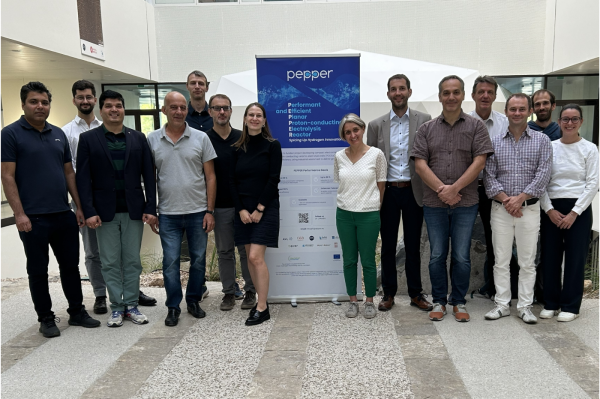
PEPPER Consortium
Most Important Technical Highlights from the Meeting
· Progress in cell development
The consortium discussed the first manufactured cells, with first samples being shipped for electrochemical testing. Partners explored the next steps for developing and scaling up both ceramic-supported and metal-supported designs, including sample exchanges and characterization plans.
·
Advancing modelling and component development
The modelling team presented their approach for specifying the PCCEL model
using experimental data and stack architecture. The next actions for data
sharing and component development.
·
Life-Cycle Assessment and Techno-Economic Assessmant
Although still at an early stage, the first structures for data collection and
system definition were presented. The LCA/TCA team plan to coordinate inputs
from all partners to prepare the initial datasets. It is never too early and as we are approaching the end of the first year of the project, it is very
important to anticipate and put in place organizational structure to collect
efficiently this information in a timely maner.
Beyond the technical discussions, the consortium also had the chance to visit the CNRS laboratories and gain insights into their ongoing research activities.
A big thank you to CNRS for hosting us in Montpellier and for creating such a welcoming environment!
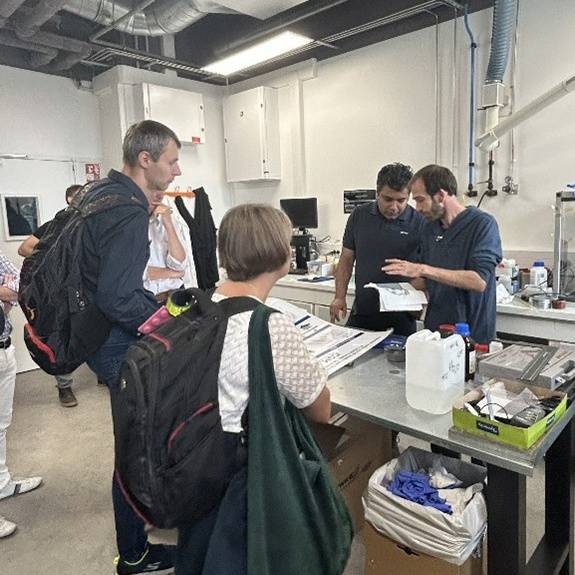
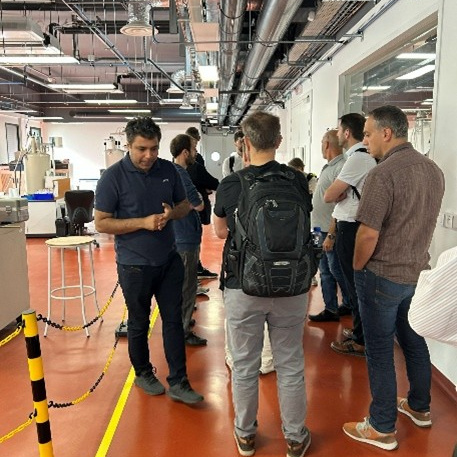
Lab Tour

The project is supported by the Clean Hydrogen Partnership and its members.

Co-funded by the European Union. Views and opinions expressed are however those of the authors only and do not necessarily reflect those of the European Union or Clean Hydrogen Partnership. Neither the European Union nor the granting authority can be held responsible for them.